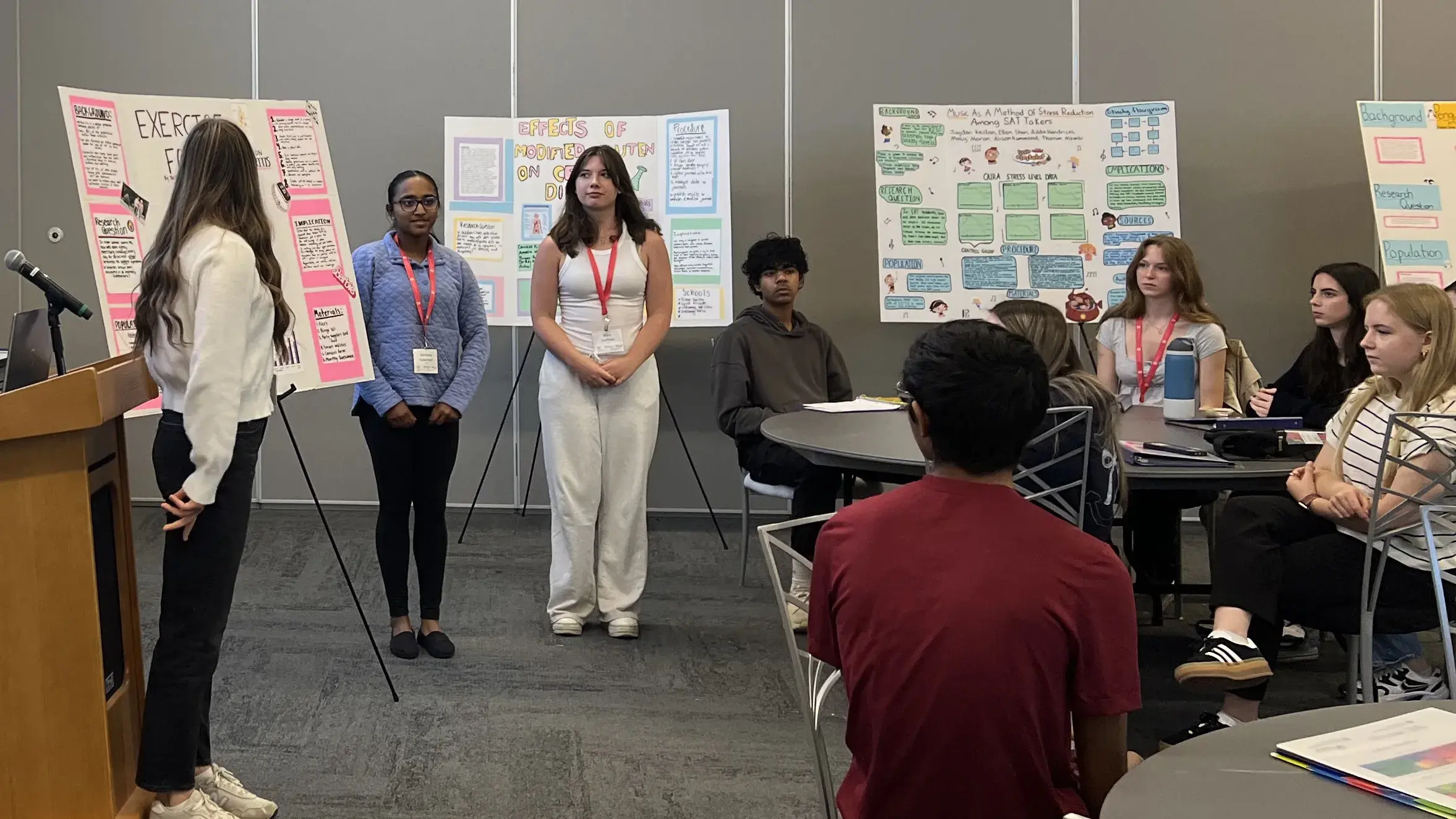
The article details Next STEPP, a four‑day summer camp designed by a team from three institutions to introduce Columbus‑area high school students to careers in clinical research. Co-led by The Ohio State University Clinical and Translational Science Institute and the College of Nursing, the pilot program generated strong interest and statistically significant gains in students’ confidence around clinical research. It also resulted in a practical summer camp toolkit to support future expansion and collaboration.
The Next STEPP immersive clinical research summer camp was designed to introduce students to the full scope of clinical research beyond what is typically visible in traditional STEM education. Rather than focusing solely on laboratory science, the program exposes students to roles that make clinical research possible, including study coordination, ethics and informed consent, regulatory compliance, data management and team science. Using a structured, backward‑design curriculum, the camp combines hands‑on activities, simulated research experiences and mentorship from practicing professionals to make clinical research tangible, relevant and exciting for students.
The summer camp was intentionally designed to broaden access and help build a sustainable clinical research professional (CRP) workforce, one of the field’s most pressing challenges. Recruitment targeted rising high school sophomores and juniors from across the Columbus metropolitan area, with a blinded application review and no GPA requirement, lowering traditional barriers and emphasizing curiosity and potential over prior exposure. Evaluation results demonstrated strong student engagement and learning gains, with participants reporting meaningful achievement of program goals and increased understanding of clinical research pathways.
Beyond its immediate educational impact, the publication highlights a critical contribution to the field through the creation of a replicable toolkit that other institutions can use to launch similar programs. By translating local innovation into a scalable model, the authors underscore how academic‑health system partnerships can lead national efforts in workforce development and training.
By inspiring students before career paths are set and by elevating the visibility and value of clinical research professionals the program offers a compelling blueprint for developing the future workforce that clinical and translational science depends on.
Julie Johnson, PharmD, is the Director and Principal Investigator at The Ohio State University Clinical and Translational Science Institute.